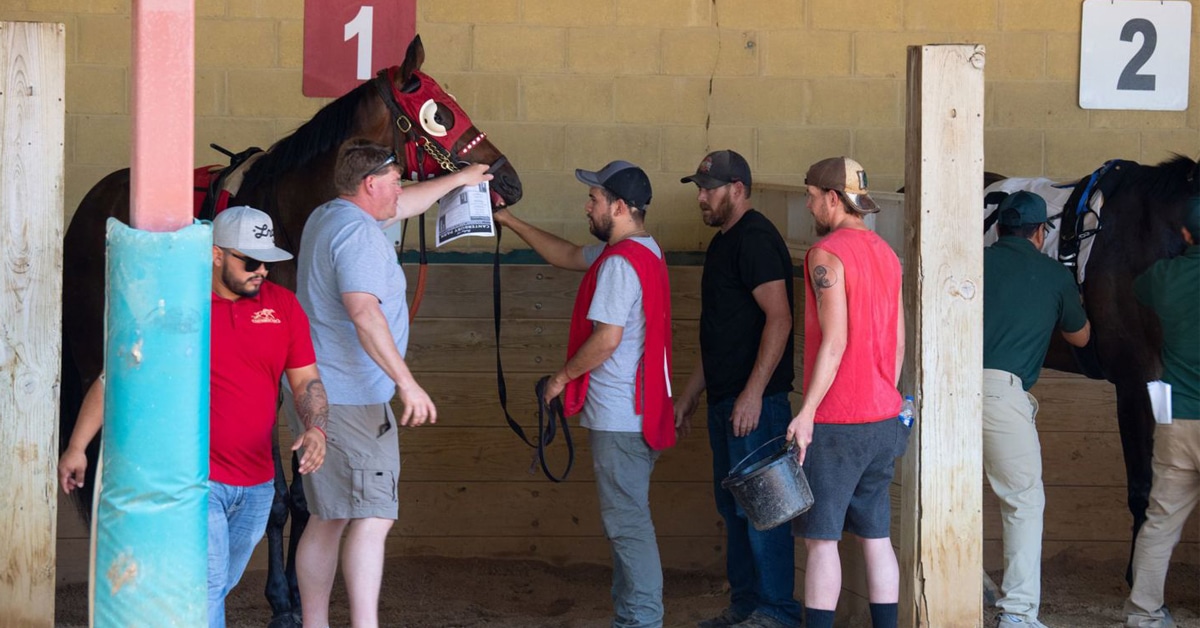
Horse racing purists tend to bristle at any comparison between the betting windows at Woodbine and a slots screen on someone’s phone. Fair enough: reading a racing program is a different skill than spinning a reel, and the two crowds have spent decades acting like they don’t overlap. But the assumption that racing bettors stay in their lane doesn’t hold up once you look at where the same money is actually going. Talk to enough people around a paddock and the overlap starts to look less like an exception and more like a pattern nobody bothered to name.
The overlap is bigger than people assume
Pari-mutuel wagering on horse racing in Canada is regulated federally by the Canadian Pari-Mutuel Agency, a body that has overseen the fairness of the betting pools since long before anyone in this country talked about “iGaming.” The takeout is published and the pools get audited. Racing bettors trust the system because it hasn’t needed a rewrite every time a new platform shows up.
Online casino and sports betting products are newer to Canada, and they don’t share that single national framework. Legality still runs province by province. That patchwork hasn’t kept racing fans from wandering over. Anyone who has stood by the rail at a Woodbine Oaks and watched a filly like Desert Ride circle the field for a stakes win knows the people checking their phones between races aren’t only checking racing odds anymore.
What racing bettors bring to a casino screen
The instinct to read past the obvious favourite doesn’t switch off just because the game changed. Racing bettors already spend their money weighing pace, form, and trainer patterns before deciding where the value sits. That evaluative habit transfers naturally to reading a payout table or a set of odds on a betting app screen, even though the underlying math works differently underneath: a fixed-odds bet isn’t the same thing as a shared pari-mutuel pool.
Woodbine’s own leadership has never talked about the track as if it were immune to how the wider betting market moves. A profile of the track’s VP of thoroughbred racing operations made clear that the people running the sport’s flagship Canadian venue think about their bettors the way any modern platform does, as customers with options rather than a captive audience. That mindset doesn’t stop at the grandstand exit.
Where the crossover actually happens
The honest answer is: unevenly, and mostly online. What’s legal depends entirely on which province a bettor happens to live in, and the list of who’s actually licensed keeps shifting as more provinces regulate. For a racing bettor curious enough to look past the track, the practical starting point is the same one any new player needs: a comparison of which sites are actually licensed to operate where they live, rather than whichever one an ad puts in front of them first. Sites like online-casinos.com run exactly that kind of online casino comparison for Canadian players, and that’s precisely why they exist: “legal in Canada” isn’t one answer.
Ontario has run a regulated, competitive online gambling market since 2022 under AGCO oversight. Alberta followed on July 13, 2026, when its own regulated iGaming market went live under AGLC, a launch the province says was designed partly to pull an estimated 70 percent grey-market share back into a licensed system. Bettors in provinces without that kind of framework are working with a much smaller, or murkier, set of licensed options.
Age matters throughout that mix, and it isn’t uniform either: most provinces set the minimum at 18, a couple sit at 19, and any operator worth using checks it at sign-up. Because there’s no single national helpline the way there’s a single national regulator for the racing pools, the Responsible Gambling Council is the country’s standing resource for players who want a check-in, a self-exclusion tool, or a referral to whichever provincial helpline actually applies to them.
The habits that don’t carry over
Not everything crosses over cleanly, and it’s worth saying so plainly. A pari-mutuel pool rewards reading a field of horses against each other. A slot machine has no field to read, and treating it like one is how a disciplined bettor loses their edge fast. The racing bettor’s advantage is real, but it’s specific. It travels reasonably well to sports betting markets with actual prices and competitors, where knowing a schedule and reading a matchup still counts for something, and much less well to games built on pure variance, where no amount of racing instinct changes the odds on a spin.
That’s probably the more honest version of the “track to table” story than either side of this usually admits. Racing bettors aren’t turning into casino players wholesale, and the two audiences aren’t merging into one. But the line between them was always thinner than the industry’s separate marketing budgets made it look, and in a country where the rules keep shifting province by province, it’s the bettors paying attention to both sides of that line who end up with the better options.
The Latest