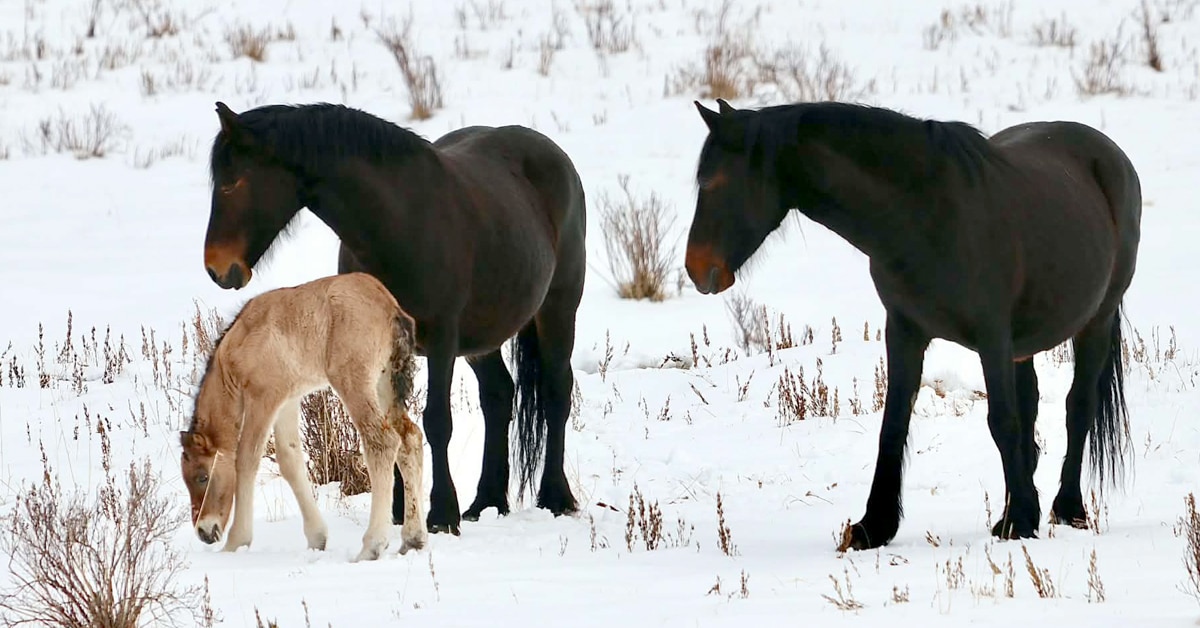
A fascinating story is unfolding in Alberta’s backcountry. On April 1, 2026, two related wildie mares (mom Fern and daughter Addy) gave birth simultaneously and within close proximity to each other. However, they chose a less-than-ideal location to welcome their newborns into the world, and both foals became trapped in a ravine.
Bear Valley Rescue (BVR) was notified and sprang into action. When they arrived, they found Fern’s black foal, Stryker, in critical condition, with his tongue hanging out and struggling to breathe. They rushed him to Moore’s Veterinary clinic. Here the vets did a SNAP (Foal IgG) blood test which revealed he hadn’t received any colostrum, the antibody-rich mare’s first milk, essential to help fight off infection. As a result, he needed an intravenous plasma transfusion, and although he perked up right away, he can never be reunited with his mother, Fern, as once a horse is removed from the wild, it is illegal to return them. Stryker is now in the care of BVR and a kind nurse mare named Cupcake adopted him as her own, after the loss of her own foal. His future is looking bright.
Cooper, the other wild foal, was untangled, brought to flat ground, and reintroduced to the band. Here’s where things get interesting. Grandmother Fern was the first to rush over, followed a few minutes later by his mom Addy. Both mares behaved as though this was their foal, nuzzling Cooper and nickering softly. They eventually walked off, one on either side, fiercely protective of their new charge.
In the days that followed, several photographers noticed the foal nursing from both mares. Cooper had two moms!
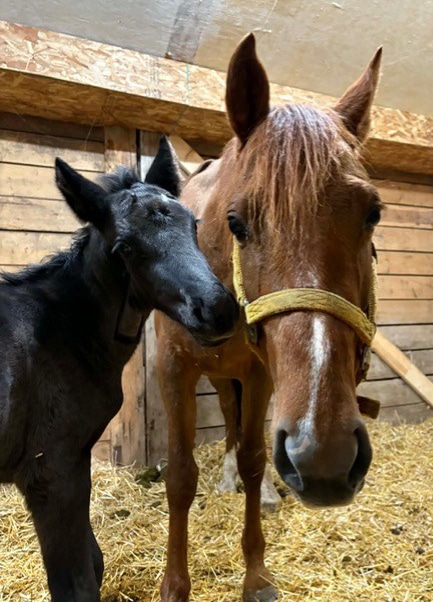
Rescued foal Stryker and his nurse mare, Cupcake, at Bear Valley Rescue. (photo supplied by BVR)
One was biological mother Addy, the other was grandma Fern who had stepped into the role of wet nurse or ‘allosuckler.’ There is no prior documentation of such a phenomenon happening among wild horses, although there have been similar occurrences in a domestic equine herd, a zebra band, and in 2025 with two domestic donkey mothers and their foal, Solomon. The communal rearing of a foal by two mares and the spontaneous adoption of a non-filial offspring is an extremely rare phenomenon, with only a one in a million chance. A perfect storm of circumstances and the ‘love’ hormone, oxytocin, played an important role.
The most crucial time for bonding occurs in the first few hours after birth and is initiated by a complex interplay of maternal hormones including oxytocin and prostaglandins. The surge in oxytocin floods neurotransmitters, which in turn enhances the mare’s ability to internalize the unique scent of her foal. Oxytocin stimulates the mare to lick and sniff her newborn, further strengthening olfactory recognition. The love hormone also has a calming effect, reducing anxiety and producing a sense of well-being which helps the mare accept her newborn instead of rejecting it as a stranger.
When the foal nurses, a ‘suckling feedback loop’ is created. The act of nursing triggers the release of more oxytocin, which in turn reinforces the maternal bond and encourages nurturing behaviour.
In cases of domestic orphan foals, in order to graft the foal to a nurse mare. veterinarians use a combination of sedatives and hormones associated with birth, including oxytocin, prostaglandin and progesterone.
Fern and Addy had simultaneously given birth in close proximity to each other. They were both separated from their foals for a brief period and were both still under the influence of an oxytocin surge when one foal was reintroduced. This perfect storm of circumstances caused them both to bond with the foal, since each mare thought it was theirs. The reason there was no jealousy or animosity between them is because the mares were mother and daughter, meaning they already cared deeply for each other, which in turn made a conflict-free, co-mothering relationship possible.
There are some important heath benefits created by this unusual family structure. The foal nursing from two mares prevents mastitis from developing in each mother, as they are still lactating, and there is certainly no shortage of milk for the foal. The mother whose foal was removed did not go through the grieving process, as she believes this foal to be hers. The foal also benefits from double the protection and love that comes with having two mothers.
The only known disadvantage of this mothering arrangement was documented in the Journal of Equine Veterinary Science in 2018 in a case study titled, The Case of Communal Rearing of a Foal by Two Mares. The researchers found that the foal experienced a lack of integration and play behaviours with other members of the band.
Only time will tell how things work out. In the meantime, lucky Cooper has two doting horse moms and never has to worry that the milk bar is going to run dry.
The Latest